How to Make PowerPoint Decks with Cowork Mode
Generate a 10-slide deck with speaker notes from one prompt.
Read more →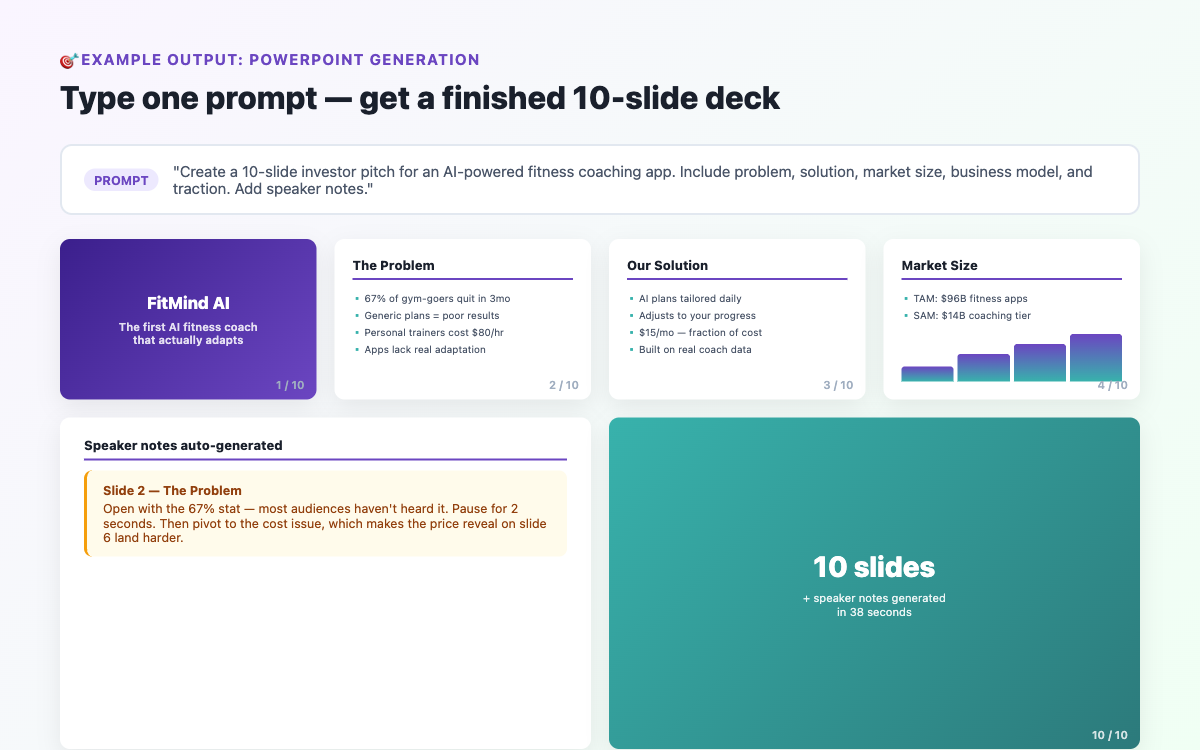
Marketing teams are under constant pressure to produce more: more content, more campaigns, more analysis, more reporting - usually with the same headcount. Claude Cowork mode doesn't replace the strategy and creativity that marketing requires, but it handles the production and research work that eats hours without adding much value. Here's what it looks like in practice.
Ask any marketer where their time actually goes and you'll hear a familiar list: drafting copy variations, reformatting content for different channels, pulling together weekly reports, researching competitors, writing briefs, and chasing approvals. Very little of that requires genuine creative thinking - it requires time, attention, and consistency. That's exactly what Cowork mode is built for.
saved weekly on content production
faster competitive research
less time on routine reporting
The biggest time sink for most marketing teams is producing content variations - the same message for email, social, website, and ads, each needing slightly different length, tone, and format. Cowork handles all variations from a single brief, letting writers focus on the strategy and quality review rather than the production.
Staying on top of what competitors are doing - their positioning, recent campaigns, product updates, pricing changes - is essential but time-consuming. Cowork searches, reads, and synthesises this into a structured report that would take a marketing analyst half a day to produce manually.
Writing a good creative brief requires gathering information from multiple sources - brand guidelines, audience data, campaign objectives, budget parameters - and synthesising it into a clear direction. Cowork reads your input files and produces a structured brief that any agency or internal team can work from immediately.
Marketing reporting is the ultimate example of repetitive, high-effort, low-insight work. The numbers rarely change that much week to week, but the time to gather, format, and write commentary stays constant. Cowork turns this into a scheduled task that runs automatically, ready for review on Monday morning.
Building detailed audience personas requires synthesising data from multiple sources - customer interviews, analytics, social listening, market research. Cowork can read your existing data files and research findings, then structure them into comprehensive persona documents that the whole team can use.
Before writing any piece of content, a good SEO brief needs keyword research, competitor analysis, topic coverage, and content structure. Cowork researches the landscape and produces a detailed brief that any writer can follow - significantly improving output quality and consistency across the team.
Email campaigns require multiple versions - subject line A/B tests, personalisation variations, different CTAs for different segments. Writing all of these manually is tedious. Cowork produces every variation with a consistent voice, letting your team focus on strategy and segmentation rather than copywriting production.
Quarterly reviews are where most marketing teams spend the most time on production rather than analysis. Cowork can produce the formatted deck and document from your data, leaving the team free to focus on the strategic narrative and recommendations rather than fighting with PowerPoint.
The key to consistent results across a marketing team is a well-written SKILL.md file that captures your brand voice, tone guidelines, audience personas, and standard document formats. When everyone on the team uses the same SKILL file, outputs are consistent regardless of who runs the task. See our Complete Guide to Skills for how to write one that works for a team.
For prompts specific to marketing tasks, browse the Prompt Library - the Email & Communications and Research categories have the most relevant templates.
Co-Founder of BrandStori.AI with 25+ years of experience in the IT industry. Also the creator of @ottasia/mcp-server - an MCP server with 500+ npm downloads, listed in the official MCP Registry. A daily user of Claude's Cowork mode - every guide on this site is personally tested before publication, so you can trust what you read here.
Hand-picked guides covering related topics.
Generate a 10-slide deck with speaker notes from one prompt.
Read more →Tested prompts for docs, Excel, PowerPoint, and more.
Read more →Get tips, updates & community insights on Claude's Cowork mode - straight to your inbox.
Get weekly tips & updates.